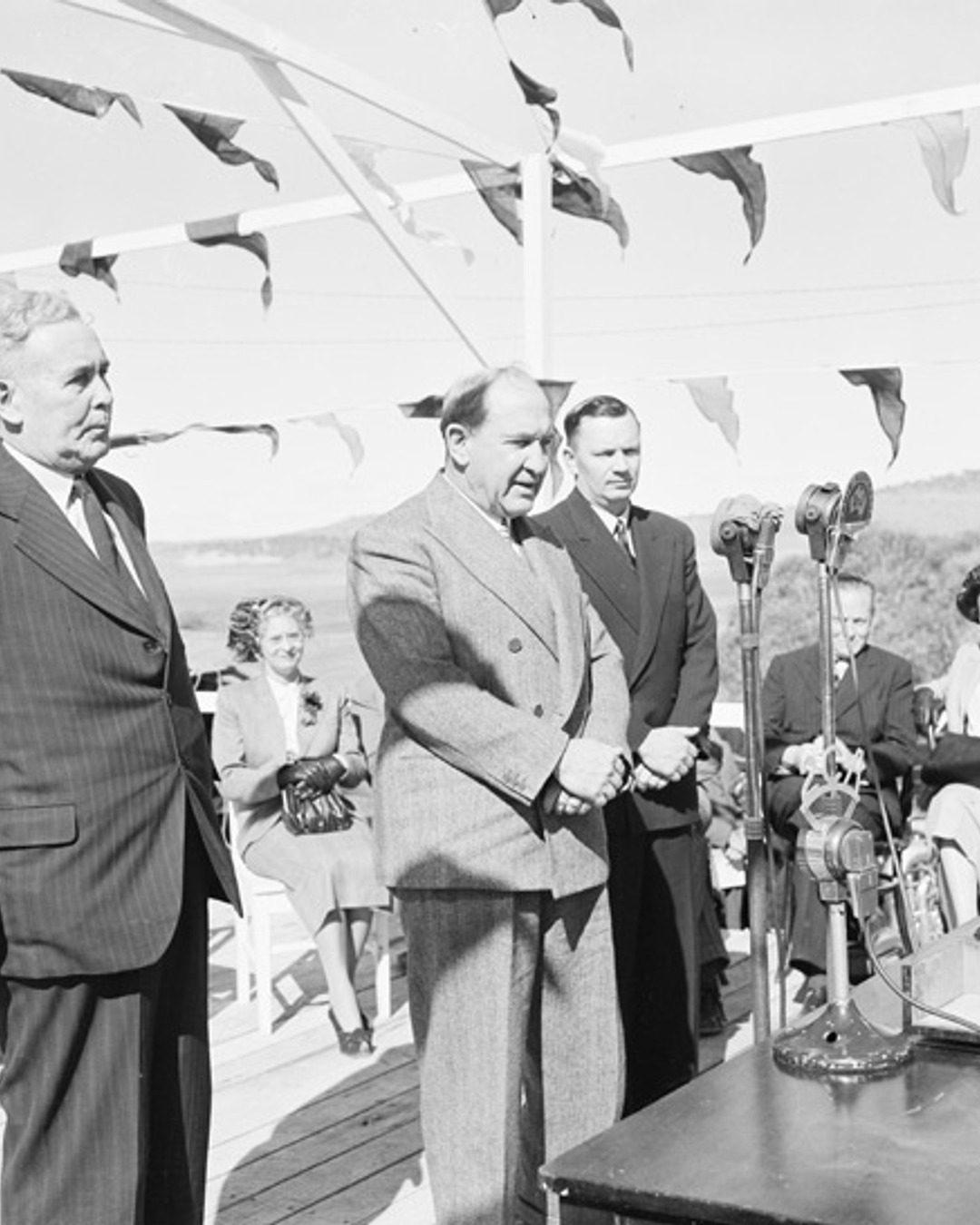
The Snowy Mountains Scheme was not only a dam-and-tunnel project. It was a large, dangerous workplace built during a postwar labour shortage, with recruitment spanning refugee camps, overseas contractors and more than 30 national backgrounds.
The short answer
The Snowy Mountains Hydro-Electric Authority needed more engineers, tradespeople and labourers than postwar Australia could supply quickly. It recruited internationally, including from European refugee and resettlement camps, while overseas contractors brought further expertise. Migrants consequently made up around 65 per cent of the project workforce. Their presence was part of the delivery mechanism, not an accidental cultural outcome after the engineering was complete.
What the workforce figure counts
The National Archives says around 100,000 people worked on the scheme between 1949 and 1974. The National Museum says more than 100,000 men and women from 32 countries worked for the authority during the same 25-year period, with a peak labour force of 7,300 in 1959. These are cumulative project totals. They do not mean 100,000 people lived in one camp or worked on one tunnel at the same time.
Why recruitment reached postwar Europe
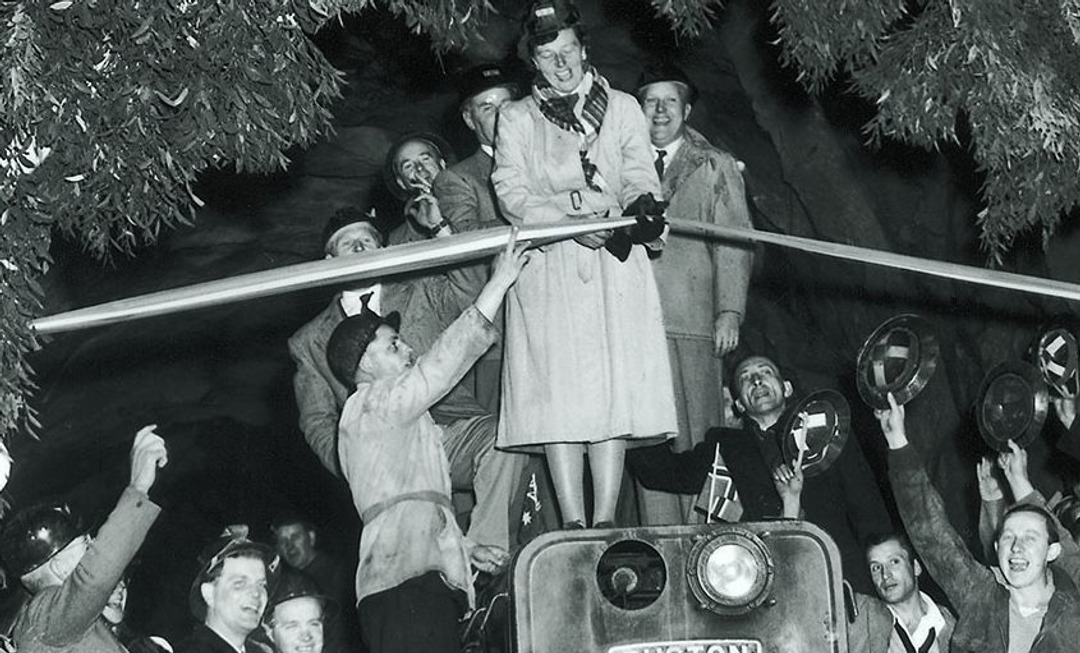
The planned system required dams, power stations, aqueducts, long tunnels, roads and new townships. National Museum research says the authority knew Australia lacked both the engineering and labour capacity to do that work at the required pace. Recruitment therefore reached qualified people in European refugee camps as well as workers seeking a new life after the Second World War. Contractors from overseas supplied techniques and training, while Australian firms later won major contracts.
The human cost belongs in the same frame
A celebratory engineering account is incomplete without the conditions. Most workers were men. Many lived in basic barracks away from their families. Tunnel drilling was dirty, physically demanding and dangerous. The official construction death toll was 121. The statistic does not describe each person's experience, but it prevents the multinational workforce from becoming a decorative symbol detached from the work people performed and the risks they carried.
Did the Snowy create multicultural Australia?
That claim is too strong. Australia's postwar migration programme, refugee resettlement, industrial expansion and changing immigration policy were already larger forces. The Snowy was one prominent workplace where those changes became visible and where people from countries recently at war worked within one project. Museum historians argue that the scheme influenced attitudes to non-British migration, but the surviving record cannot isolate it as the single cause of a national social change.
What remains unknown
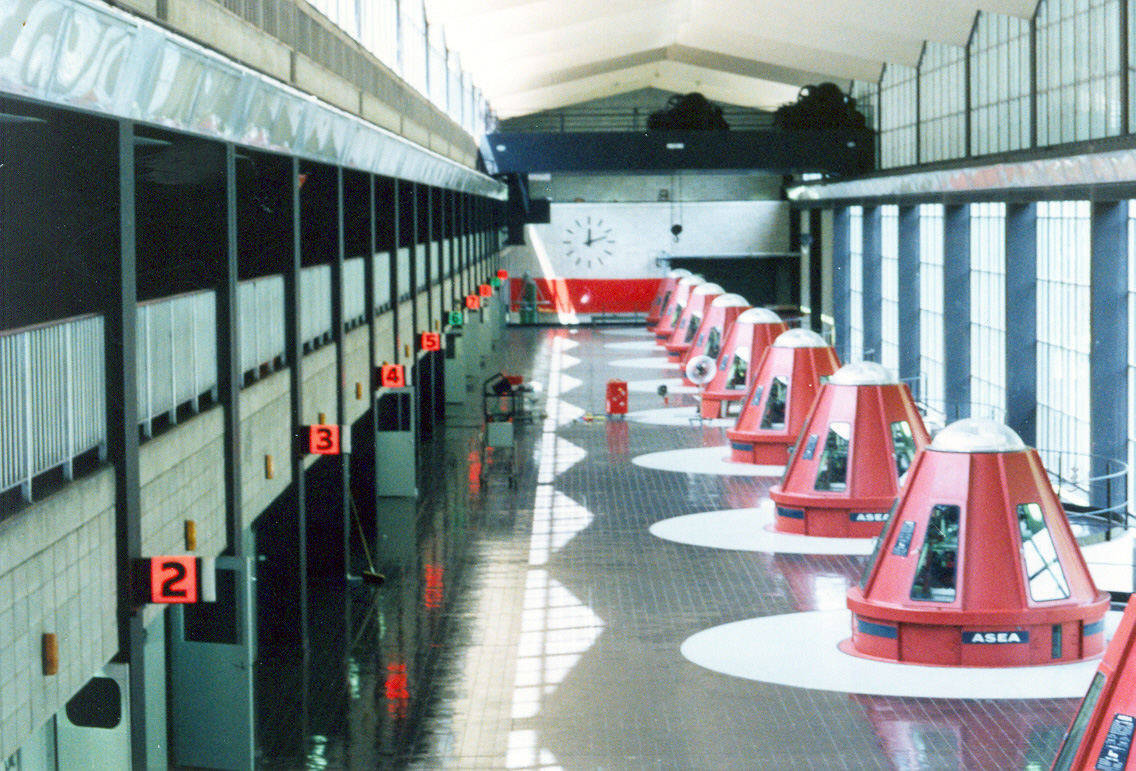
Aggregate workforce figures cannot tell readers whether every nationality, occupation, camp or family experienced the scheme in the same way. The archives contain individual stories but not a representative interview sample of 100,000 workers. The strongest supported conclusion is narrower: international recruitment solved a material skills and labour problem, migrants formed most of the workforce, and their working lives are inseparable from the Snowy's engineering record.
The Snowy's dams and tunnels were Australian infrastructure built through a multinational labour system.
- National Archives of Australia: Snowy Mountains Hydro Electric Scheme, Current 12 May 2026 archival account of dates, workforce share, countries represented, working conditions, deaths and project components.
- National Museum of Australia: Snowy Mountains Hydro, Authoritative synthesis of recruitment, cumulative and peak workforce measures, construction outputs, migration context and limitations.
- National Museum of Australia: Snowy Scheme collection, Collection route for worker objects and project records.
The article separates cumulative workforce totals from peak headcount and treats the scheme's social influence as historical interpretation rather than a measured single cause. The National Museum pages were readable in an independent web check but returned automated HTTP 403 responses, consistent with bot blocking. Corrections can be requested through the public Australia, Actually correction route and brand mailbox. Found a problem? See our correction process.