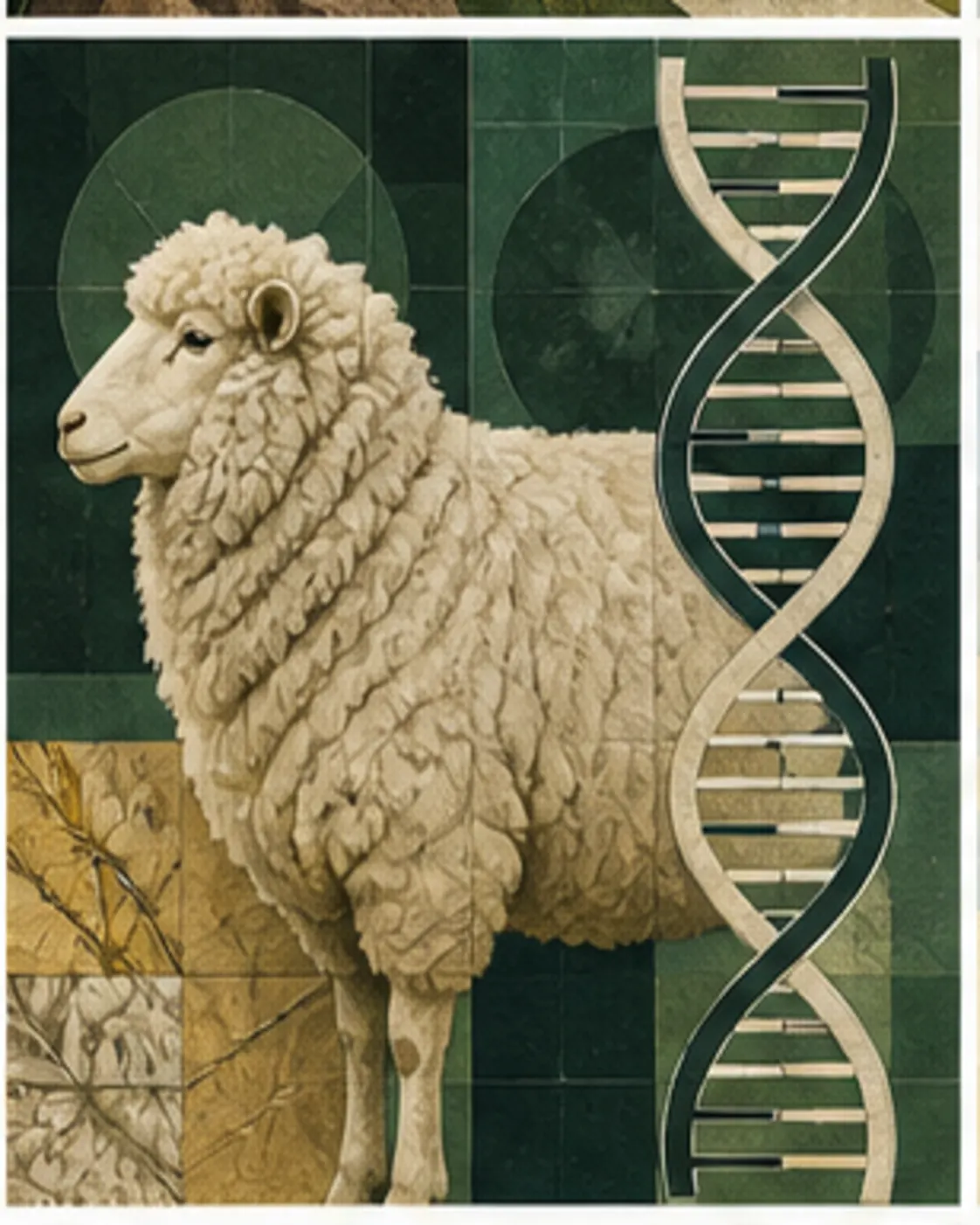
ImmuneDEX uses measured immune responses and genetic information to help breeders consider one component of Merino resilience.
Resilience needs a measurable trait
Farmers can see that some sheep cope better with disease, climate and management stressors, but a broad idea such as toughness is difficult to breed for. ImmuneDEX narrows the problem to immune competence. Researchers give animals the same standard vaccine challenge, measure differences in their immune response and combine population data with genetics. The tool therefore estimates one biological component of resilience rather than declaring an animal universally resilient.
The genetic signal
CSIRO says the research found consistent individual differences and a heritable component. Heritability means some variation in the measured trait is associated with genetic differences in the studied population. It does not mean genes determine every outcome. Nutrition, disease exposure, weather and management still matter. The practical opportunity is to add a new selection signal to existing breeding information, then test how it performs across flocks and environments.
Productivity is not the same thing
The reported work found little to no correlation between this immune competence measure and key wool or bodyweight production traits. That is useful because selecting only for production does not automatically select animals that respond well to stressors. It also means breeders face a multi-trait decision. A new index should be considered alongside wool quality, growth, reproduction, health and the farm's own environment rather than used as a single ranking of animal worth.
How the collaboration works
CSIRO developed the approach with Neogen, the Animal Genetics and Breeding Unit and Sheep Genetics, building on earlier projects supported by Australian Wool Innovation. Research creates the measurement and genetic model; national evaluation services provide a path for standardised breeding information; producers test whether it adds value in real decisions. That chain is what turns a laboratory finding into a tool, and each step can reveal limits that were not visible in the original study.
What is still uncertain
The public release summarises the result but does not answer every adoption question. Producers need information about accuracy across breeds and environments, the cost of genotyping, how rapidly estimates update, and the relationship with actual lifetime outcomes. An index can be statistically valid yet have modest value on a particular property. Independent field evaluation and transparent technical documentation will matter as the second phase expands access.
A more precise promise
ImmuneDEX does not create stress-proof sheep. It offers a way to include measured immune competence in breeding choices where that trait is relevant. The frontier is the move from an important but vague farm observation to a repeatable genetic evaluation. Its success will be judged by whether the signal remains reliable, complements other traits and helps producers improve animal health without overstating what one index can predict.
- CSIRO ImmuneDEX release, Checked 14 August 2026 for The new attempt to measure resilience in Merino sheep.
- Sheep Genetics, Checked 14 August 2026 for The new attempt to measure resilience in Merino sheep.
Australia, Actually checked the linked records on 14 August 2026. Claims are limited to what those records establish. Google Trends figures, where used, are rounded attention signals rather than audience totals. Found a problem? See our correction process.