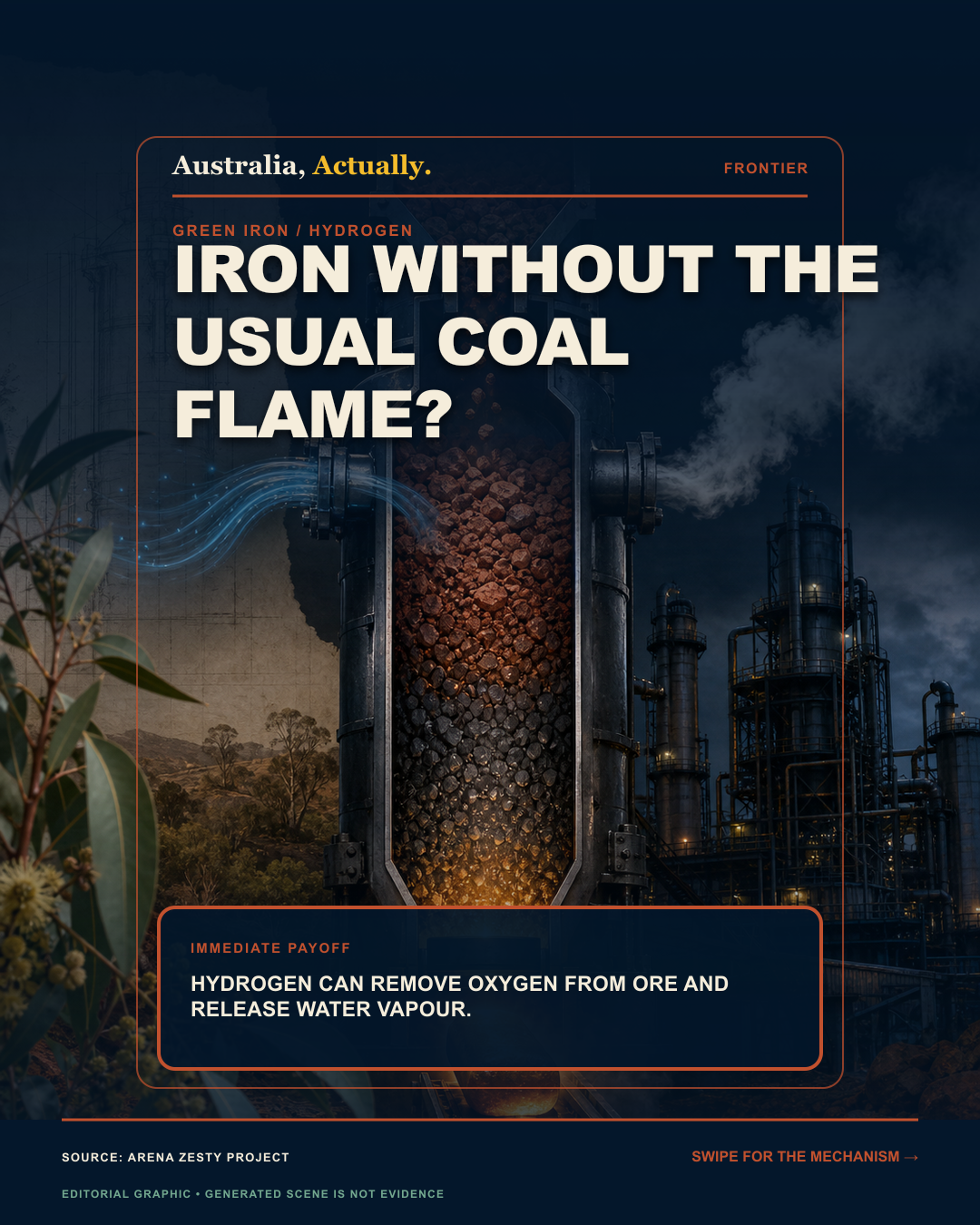
The chemistry is direct: iron oxide loses oxygen, hydrogen gains it, and metallic iron remains. Calling the product green requires evidence across the whole process.
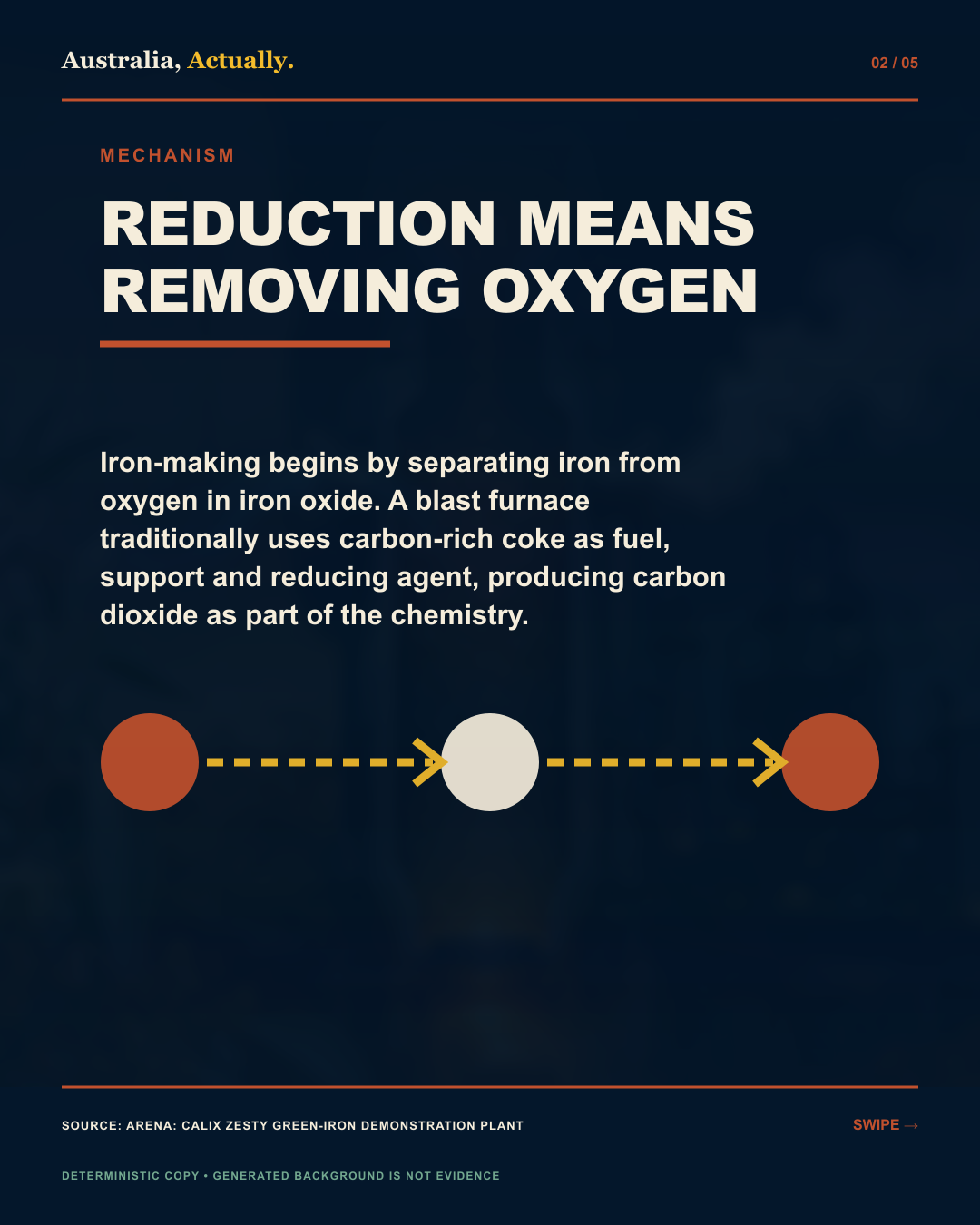
Reduction means removing oxygen
Iron-making begins by separating iron from oxygen in iron oxide. A blast furnace traditionally uses carbon-rich coke as fuel, support and reducing agent, producing carbon dioxide as part of the chemistry. Direct-reduced iron processes operate below the melting point and use a gas to remove oxygen. Hydrogen offers a different reaction path: oxygen leaves the ore with hydrogen as water vapour.
The iron still needs a complete process
Direct reduction produces porous metallic iron rather than a finished steel product. The material may be compacted, protected from reoxidation and melted in another furnace before alloying and casting. Ore chemistry and particle form matter because the reducing gas must reach the oxygen-bearing material. Energy is also needed to make hydrogen, heat the reactor, move gases and operate the downstream plant.
ZESTY is a demonstration with a specific claim
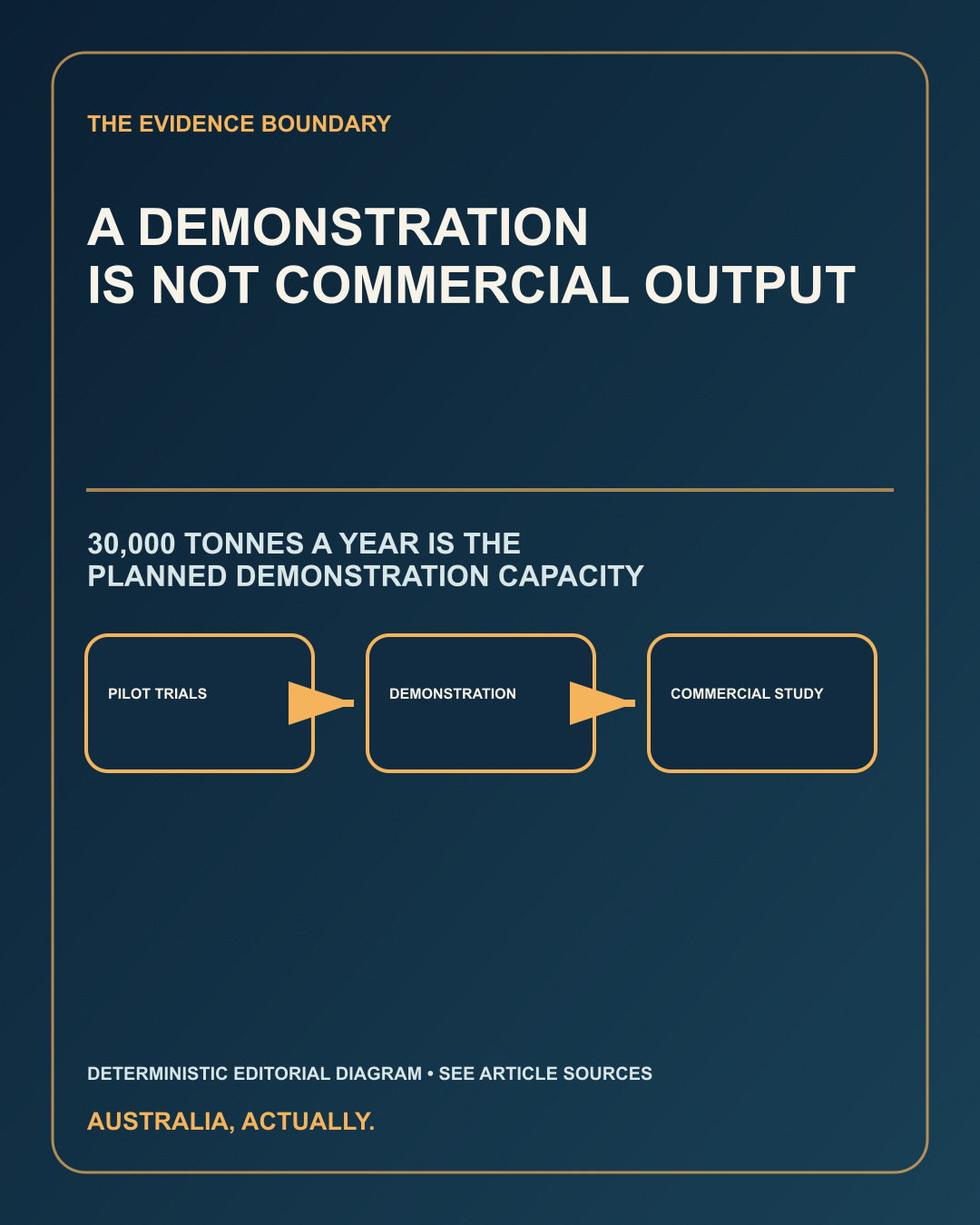
ARENA describes Calix's Zero Emissions Steel Technology project as a planned demonstration of hydrogen direct reduction using a vertical electric calciner. The project page lists a proposed annual demonstration capacity of 30,000 tonnes and a 2025 to 2031 project period. Those are project parameters and plans. They are not evidence that the plant is already producing commercial green iron at that rate.
The emissions test extends beyond the reactor
Hydrogen made with renewable electricity can reduce emissions at the chemical step, but results depend on electricity supply, hydrogen production and storage, ore preparation, transport, equipment and downstream melting. Water vapour at the reactor outlet does not by itself certify the whole product as zero emissions. Life-cycle boundaries and measured energy use are needed before comparing routes.
Hydrogen changes the oxygen-removal chemistry. It does not remove the need to prove the rest of the iron-making system.
Australia's opportunity is easy to see: abundant iron ore, renewable-energy potential and demand for lower-emissions materials. The engineering gate is equally visible. A demonstration must show reliable reduction, suitable products, manageable hydrogen and electricity demand, integration with steelmaking and costs that work beyond a project headline.
- ARENA: Calix ZESTY green-iron demonstration plant, Official project scope, technology, proposed scale and 2025 to 2031 period.
- ARENA: renewable hydrogen, Official context for renewable-hydrogen production, uses and project boundaries.
Primary source routes rechecked 2026-08-09; preserve project, demonstration and commercialisation boundaries. Recheck again immediately before authorised publication. Found a problem? See our correction process.