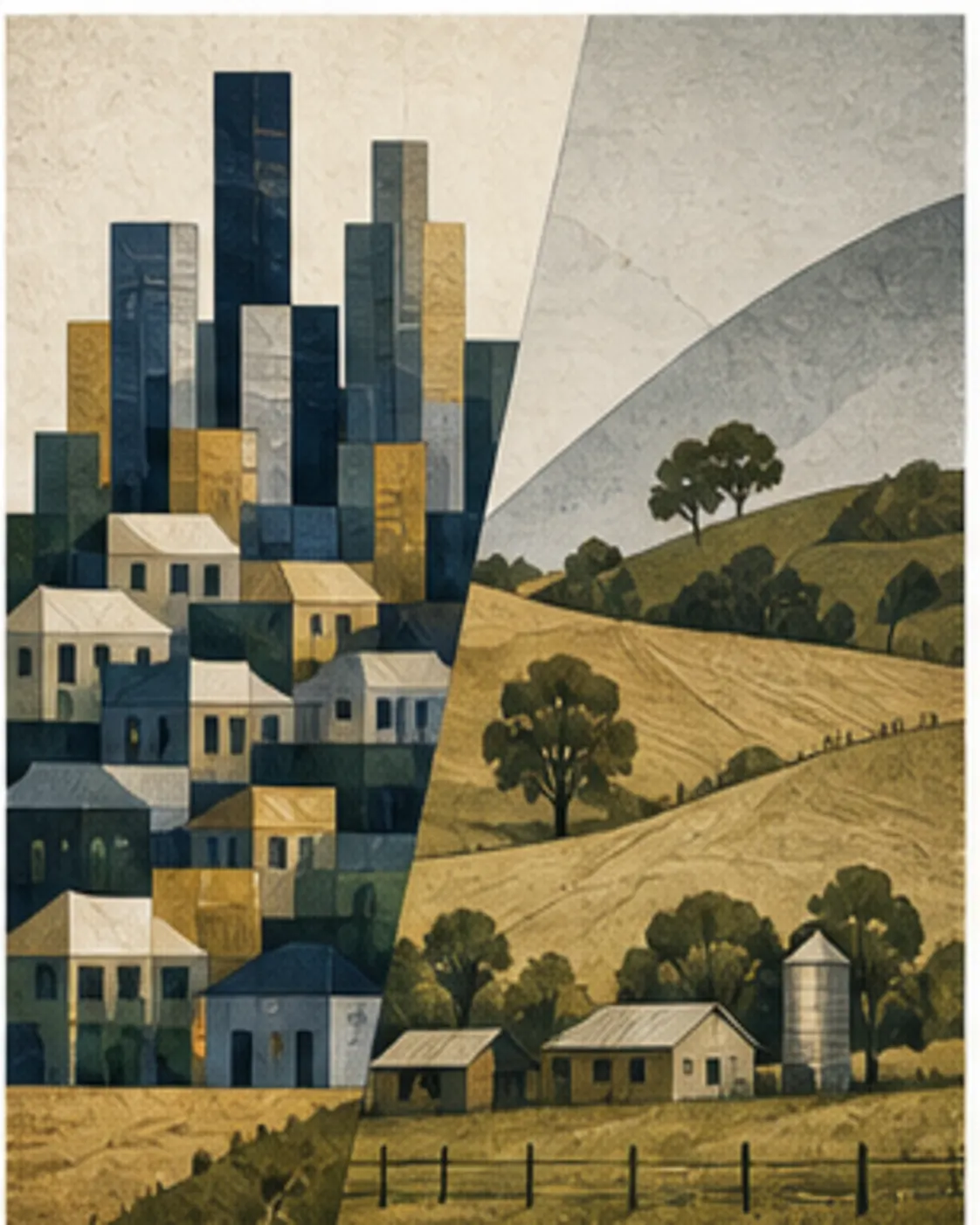
The ABS measures urban settlements but says it does not produce an official list of Australian towns and cities.
The short answer
Australia does not have one national ABS list that settles which places are officially cities and which are towns. The ABS explicitly says its Urban Centres and Localities are statistical geographies, not official definitions of towns and cities. State laws, local history, gazetted localities, councils and ordinary usage can all use the words differently. A claim that Australia has a precise official city count needs to name the rule and authority behind it.
What the ABS does classify
The Urban Centres and Localities structure identifies concentrations of urban development using population, dwelling density and infrastructure criteria. In the Edition 3 design, an Urban Centre generally had a core urban population of 1,000 or more, while a Locality generally contained 200 to 999 usual residents. Those labels help publish census statistics. They are not honours, municipal charters or a national verdict on civic identity.
Why nearby settlements can merge
For statistical purposes, physically connected development can be combined into one Urban Centre even when residents use several town names. Cross-border settlements can also be designed as one urban unit and then split for state reporting. Conversely, a familiar small town can fall below the population criteria and appear only through a gazetted locality or another geography. The classification follows analytical design, not every name people use on the ground.
City can mean government or identity
In one context, city refers to a local government body. In another it describes a large built-up area, a historic designation or a community's own identity. Council boundaries can include rural land far beyond the continuous urban area. A metropolitan labour market can extend across several councils. This is why rankings of Australia's largest cities differ depending on whether they count council populations, urban centres or Greater Capital City Statistical Areas.
The 2026 transition
ASGS Edition 4 is being released progressively for the 2026 Census cycle. Urban structures will update later in that program, while some data continues on Edition 3 during transition. Population growth and new development can change statistical boundaries. A place has not necessarily become or ceased to be a town just because its classification changes. The geography is being adjusted so the data remains useful.
Ask the hidden question
When someone asks whether a place is a city, clarify what they need to know. For an address, consult the official locality. For a council, use the state or territory local government record. For population comparisons, choose one consistent ABS geography and edition. For history, check the legal and civic record. The word city feels simple, but a reliable answer begins by identifying which Australian system is being asked to define it.
- ABS Urban Centres and Localities, Checked 14 August 2026 for Does Australia have an official list of cities?.
- ABS ASGS Edition 4 methodology, Checked 14 August 2026 for Does Australia have an official list of cities?.
Australia, Actually checked the linked records on 14 August 2026. Claims are limited to what those records establish. Google Trends figures, where used, are rounded attention signals rather than audience totals. Found a problem? See our correction process.