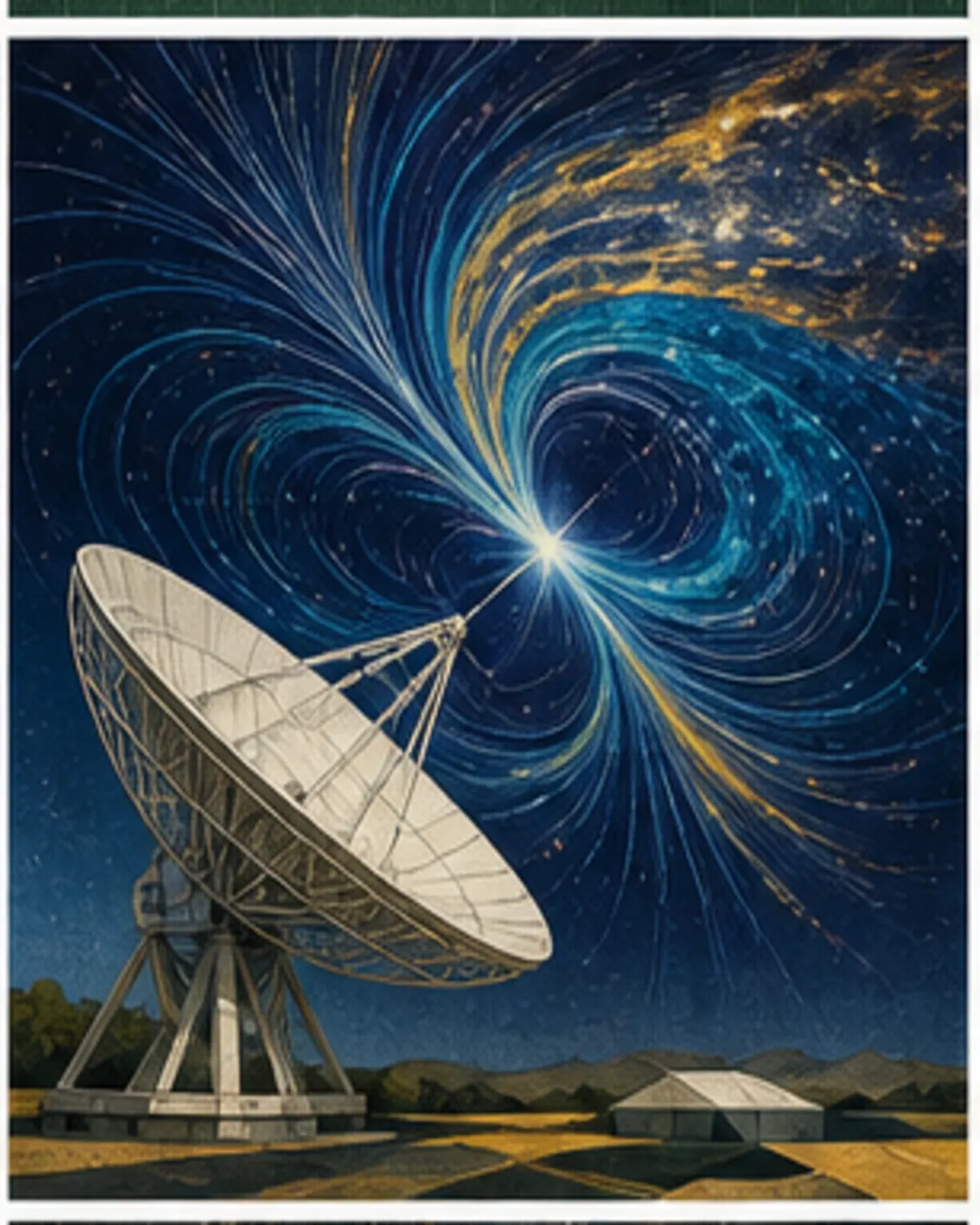
CSIRO's ASKAP telescope helped produce SPICE-RACS, a vast map built by measuring how magnetic fields twist radio light.
Magnetism that cannot be photographed directly
Magnetic fields influence how gas, matter and energy move through galaxies, yet they are not visible in an ordinary sky image. The SPICE-RACS project used radio observations to infer them. As polarised radio light travels through magnetised material, its orientation rotates by an amount related to the field and intervening electrons. Measuring that rotation across many distant sources turns background galaxies into probes of otherwise hidden structure.
ASKAP supplied the scale
The Australian Square Kilometre Array Pathfinder can survey wide areas of sky with unusual speed and depth. The project reprocessed observations from nearly four million galaxies in CSIRO's Rapid ASKAP Continuum Surveys. CSIRO describes the resulting magnetic map as the largest produced so far and five times larger than previous efforts combined. That headline refers to the dataset's scale, not a literal colour photograph of magnetic lines.
What the map contains
Each usable radio source can contribute a rotation measure, a line-of-sight clue to magnetic material between the source and the telescope. Dense coverage lets researchers examine the space between nearby stars and compare magnetic environments around vast numbers of galaxies. The map does not provide a simple three-dimensional field strength at every point. It is a structured collection of measurements from which researchers test models and identify patterns.
Why Western Australia matters
ASKAP sits at Inyarrimanha Ilgari Bundara, CSIRO's Murchison Radio-astronomy Observatory on Wajarri Yamaji Country. The radio quiet environment supports sensitive observation, while the telescope's phased array feeds provide a wide field of view. The location is also part of the broader international path toward the SKA telescopes. The new map shows how a precursor instrument can produce major science before the next observatory is fully operating.
Open data changes the payoff
CSIRO says the data is available through its portal for scientists to reuse, test and combine with other surveys. That matters because the first paper is not the final value of a large survey. Independent teams can replicate analyses, explore the Milky Way and Magellanic Clouds, or search for different magnetic signatures. Open access turns a one-off result into infrastructure for questions the original team may not have anticipated.
The frontier ahead
Researchers expect more detailed maps as ASKAP surveys continue and the SKA begins early operations later in the decade. Better density, coverage and calibration could help investigate when cosmic magnetic fields appeared and how they affected galaxy evolution. Those are open questions, not solved claims. SPICE-RACS advances them by replacing a sparse inherited picture with a much richer southern-sky measurement grid.
- CSIRO SPICE-RACS release, Checked 14 August 2026 for How an Australian telescope mapped hidden cosmic magnetism.
- CSIRO Data Access Portal, Checked 14 August 2026 for How an Australian telescope mapped hidden cosmic magnetism.
Australia, Actually checked the linked records on 14 August 2026. Claims are limited to what those records establish. Google Trends figures, where used, are rounded attention signals rather than audience totals. Found a problem? See our correction process.